
Hazing
What Is Hazing?
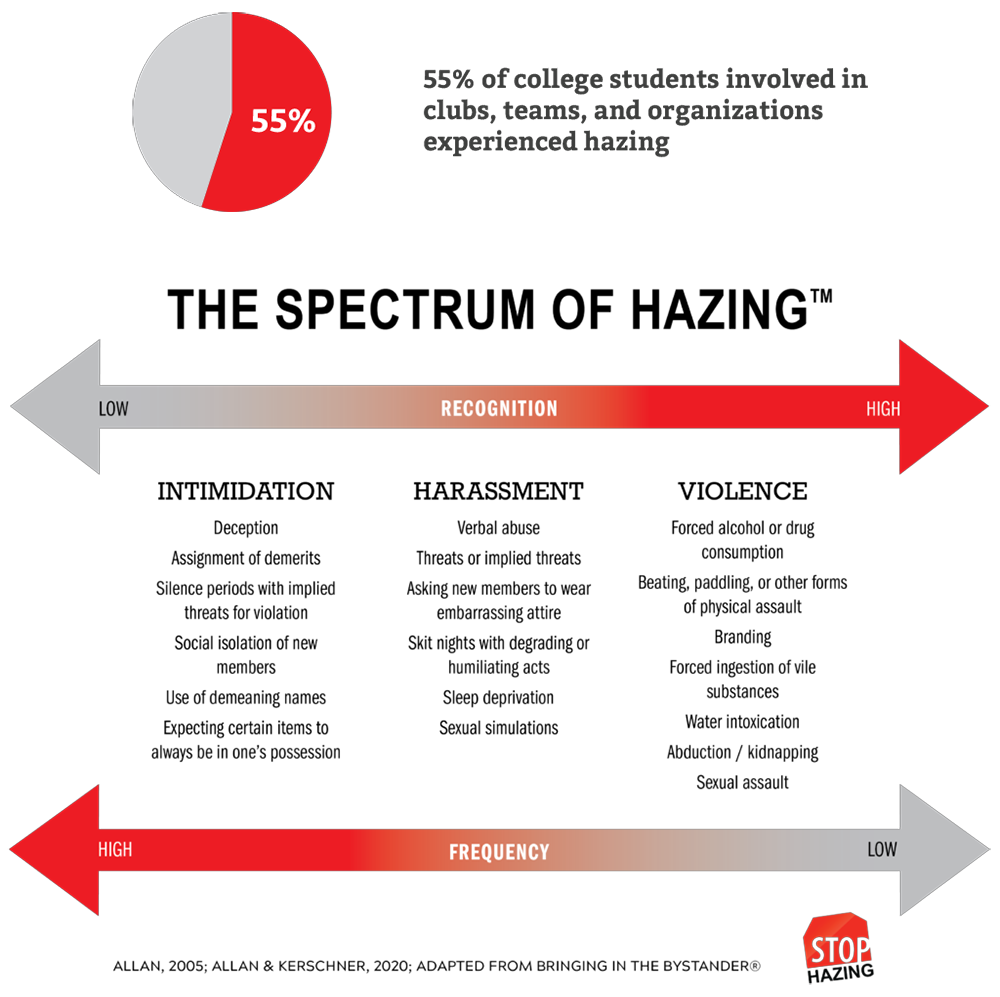
55% of college students involved in clubs, teams and organizations experienced hazing.
College Policy and Definition (PDF)
The Spectrum of Hazing Behaviors
Source: Spectrum information provided by StopHazing.org
Low Recognition, High Frequency
- Intimidation
- Deception
- Assigning demerits
- Silence periods with implied threats for violation
- Socially isolating new members
- Demeaning names
- Expecting certain items to always be in one’s possession
Medium Harassment, Medium Frequency
- Harassment
- Verbal abuse
- Threats or implied threats
- Asking new members to wear embarrassing attire
- Skit nights with degrading or humiliating acts
- Sleep deprivation
- Sexual simulations
High Violence, Low Frequency
- Violence
- Forced consumption of alcohol or drugs
- Beating, paddling or other forms of assault
- Branding
- Forced ingestion of vile substances
- Water intoxication
- Abduction/kidnaps
- Sexual assault
How to Report
Whether you have witnessed an act of hazing, heard friends/students discussing a concerning activity or have participated in hazing yourself, there are several ways to notify the College of hazing behavior:
- Report if you see or know about acts of hazing occurring with any Owens-affiliated person.
- An online incident report alerts the designated College officials so an appropriate intervention can be made to resolve the behavior. When submitting an incident report, you should include as much detail as you have at the time to ensure a prompt and accurate investigation into the matter. Anonymous reports may be submitted, however, it is discouraged because it limits our ability to gather additional information and address the issue in a comprehensive manner.
- If you believe that a student is an imminent danger to themselves or others or you have been made aware of a potential violation of the law, contact the Department of Public Safety at (567) 661-7575 immediately.
Intervention
Hazing is frequently perpetuated by the idea of “tradition.” Groups often say “we’ve always done this” or “I/We had to do it, so you/they have to do it.” Changing those traditions and stopping those cycles may seem difficult, but it is the right thing to do if you want to ensure a healthy, safe, responsible and supportive experience for you and your fellow students.
Bystanders
Bystander Intervention for Hazing video: This Gordie Center video walks you through the five steps to bystander intervention when you see hazing.
- Bystanders are individuals who see or know about violence happening.
- Bystanders play an important role in reducing violence on campus and in our community.
Green Dots
Green Dots are ways that bystanders can intervene in situations in which someone may be in harm’s way, regardless of your comfort level.
- Think of a distraction that will defuse a situation directly such as asking for directions.
- Ask someone to help on your behalf, like a friend, a coach, a faculty member, an advisor or a peer.
- Do something yourself (like ask someone to stop what they are doing).
Education and Prevention
How to prevent hazing: start talking about it!
The first thing you can do is honestly look at the activities your group engages in and determine if they constitute hazing by asking yourself some questions:
- Would I be willing to describe the activity to my parents, grandparents, instructors, advisors or police?
- Would I be concerned if a video of this activity were to be made public?
- If I asked a more senior member of this group/team to do this, would they?
- Do we have a detailed communication plan to make sure everyone stays safe during this activity?
If you answered “yes” to any of these questions, there is a good chance this is hazing behavior. You should consider having honest conversations about your group/team’s traditions and activities and consider their purpose and value.
If it’s something that’s “always been done,” then start new traditions and work together as a group to create new and exciting ways to engage and welcome new members.
Resources

HazingPrevention.Org
A national nonprofit dedicated to empowering people to prevent hazing.
StopHazing
An organization dedicated to violence prevention and disruption.
We Don’t Haze (Vimeo Video)
This award-winning documentary shares the perspectives of those who have had their lives impacted by hazing and touches on key prevention themes such as examples of hazing, how to recognize hazing behaviors and alternatives to hazing.