
Honors Program 15th Symposium
Friday, May 1, 2026
1-5 p.m.
Heritage Hall
View Heritage Hall on Google Maps
Scholars present their completed Honors Contracts in a formal presentation to the College community and guests at the Symposium, which highlights the pinnacle of academic work from Honors Scholars.
Download the Symposium Program (PDF)
Keynote Speaker
Justin Abner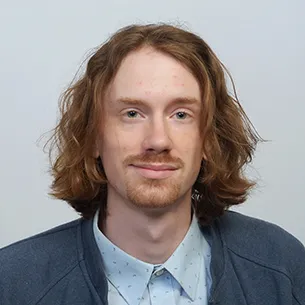
Marketing Strategist, Yarder Manufacturing
Justin is a past Honors Club Vice President as well as a Service and Leadership scholar. He graduated with an environmental science concentration degree from Owens in Spring 2024 and is an Honors program medallion recipient as well. He continues to influence the Toledo community through both his career and volunteer activities. Justin’s work in manufacturing has allowed him to contribute to the development of Metroparks Toledo’s infrastructure, while his volunteer engagements help keep those parks clean, healthy, and safe. As a volunteer writer for the National Museum of the Great Lakes, he aims to encourage more responsible stewardship of the Lake Erie watershed. Currently, he is carrying out the digital migration and maintenance of the Yarder Manufacturing website while assisting with the physical move of the century-old business.
Presentations
Session 1: 1:45-2:30 p.m.
Heritage Hall Room 123
COMMUNITY BUILDING THROUGH SERVICE
Session Chair: Dr. Mohammed Elnahal, Humanities
Grant Carr, Broadcast Media Technology
“The Very Hungry Caterpillar| The Week of the Young Child”
Faculty Mentor: Robert Ticherich, Broadcast Media Technology
This project is an animated adaptation of The Very Hungry Caterpillar in collaboration with early childhood education students, who provide narration for the story. The project also includes an interactive, child-focused program featuring activities such as “Healthy or Not?” and “I Spy,” designed to engage audiences while reinforcing concepts related to food and the stages of the caterpillar’s development.
Meghan Hubbard, Criminal Justice Transfer
“A False Promise of Safety? Community Policing and Domestic Violence Response”
Faculty Mentor: Michael Linthicum, Criminal Justice Sciences
This project examines whether community policing effectively addresses domestic violence or falls short of protecting victims. By analyzing policies such as mandatory arrest laws and police advocate partnerships, it highlights the gap between theory and real-world outcomes. The research argues for more trauma-informed, victim-centered approaches to improve safety and trust.
Michael Blevins, Health Information Technology
“Adopting Electronic Health Records and Ensuring Data Security Compliance with HIPAA”
Faculty Mentor: Teresa A. McGaharan, Health Information Technology
As healthcare systems transition to electronic health record systems, securing protected health information (PHI) becomes increasingly difficult because of the rise in cyber threats, data
breaches, and unauthorized access. The law requiring the confidentiality and security of this data is
primarily driven by the Health Insurance Portability and Accountability Act (HIPAA), with
requirements to protect patient data across healthcare delivery systems.
Owens Honors Club
“Community Building and the Honors Club”
Faculty Mentor: Dr. Genesis Downey, Honors Club Advisor
The Owens Honors Club will discuss their experiences working as “the face” of the Honors Program this year. They will focus on their community outreach initiatives as well as their campus engagement, and the big takeaways they gained from the Mid East Honors Association (MEHA) Conference held at the University of Indiana South Bend in April. Their purpose is to share why and how service to the college and to the larger community is a crucial element in the way the club operates.
Session 2: 2:45-3:45 p.m.
Heritage Hall Room 123
THINKING CRITICALLY ABOUT VIOLENCE, SAFETY, AND SUFFERING
Session Chair: Morgan Balcerek, Biology
Esther Gualtieri, Fine Arts Concentration
“The Social Construction of Threat: Labeling, Moral Panic, and the Venezuelan Immigrant in the Urban Context of the United States”
Faculty Mentor: Anna Queen, Social and Behavioral Sciences
This project examines how Venezuelan immigrants in the United States are socially constructed as a threat through processes of labeling, moral panic, and discourse. It focuses on how language, media framing, and political narratives shape public perception and justify forms of social control in urban contexts. By integrating demographic context and case studies, the analysis highlights how these narratives influence inclusion, exclusion, and the reconfiguration of urban space.
Tristan Ogburn, Biology
“Why Do We Suffer?”
Faculty Mentor: Steve Culbertson, Humanities
One of the central questions that has arisen alongside the development of human civilizations is “why do we suffer?” The project looked at different historical and religious texts to analyze the perspective of different peoples, philosophers, and religious leaders and how they answered that question. There are similarities between philosophies, but each text had its own unique answer.
Cayla Hoffman, Nursing
“Workplace Violence in the Emergency Room”
Faculty Mentor: Joe Duda, Humanities
Violence in the emergency room is growing year by year, and causing nurses and other staff to become fearful, anxious, injured, and burnt out. This can lead to poor patient care, nursing shortages, and strikes. There are a few ways to help control this problem including safety policies, de-escalation skills building, and restraints/sedation.
Michael Blevins, Health Information Technology
“The Impact of Coding Specificity on MS-DRG Assignment and Reimbursement: A Simulated Case Study Analysis Using AHA Coding Handbook Cases”
Faculty Mentor: Teresa A. McGaharan, Health Information Technology
Accurate medical coding plays a critical role in hospital reimbursement under the Medicare
Severity Diagnosis-Related Group (MS-DRG) payment system. The specificity of diagnosis and
procedure coding can significantly influence MS-DRG assignment, case mix index (CMI), and
overall reimbursement. Errors or lack of specificity may result in lost revenue, compliance risks,
or improper payments.
Session 3: 4-4:30 p.m.
Heritage Hall Room 123
CAPSTONES: ON RESEARCH AND APPLICATION
Session Chair: Dr. Genesis Downey, Humanities
Bonnie Long, Sociology Transfer
“Enough, Just as You Are: A Queer & Neurodivergent Belonging”
Faculty Mentor: Jen Hazel, Humanities
This Capstone combines Queer Theory, neurodivergence studies, qualitative interviews, and multimedia storytelling to show how rigid norms shape belonging for queer and neurodivergent students. The project argues that belonging should adjust to people not the other way around and culminates in an accessibility‑centered advocacy website designed as a living archive. It transforms academic research into practical tools, stories, and resources that model inclusive, affirming campus culture. This presentation will discuss Phase 1: Research. Q&A will follow.
Melana Cook, Chemistry Concentration
“Effects of Plastic Pollution on Communities in the Global South”
Faculty Mentor: Dr. Genesis Downey, Humanities
This Capstone is a documentary-styled video that examines the effects of overconsumption, plastic pollution, and waste trade on the environmental and physical health of global south. Additionally, the video covers international efforts to reduce impact and what steps can be taken by the individual to contribute to such efforts.